David Newby, president emeritus of the Wisconsin AFL_CIO, ran across a blog of mine from September, 2016, and felt that even now, nine years later, what I wrote then is most apropos today. Anyway, judge for yourself. You may read that post by clicking here.
Advoken's Blog
Just another WordPress.com weblog
-
The Women in My Life: Bringing New Meaning to the Phrase, “Never Underestimate the Power of a Woman”
(Adapted from homily given to the Community of the Living Spirit, a nondenominational prayer group in Waukesha WI, by Ken Germanson, Sept. 7, 2025)
Most of you must have remembered the Ladies’ Home Journal, a popular magazine years back.
The Journal created an interesting tagline: “Never underestimate the power of a woman.” And as I grew up, I soon learned that women indeed have power.

Mother Jones Ironically, in looking into the background of that famous slogan of the Journal, I learned it was first used in 1941, created by an ad agency, and that the phrases were never meant to be used as part of the women’s liberation movement or as plea for feminism. It was meant strictly to tell women that they should be more involved in making the decisions of what the family should buy; it was to tell their husbands (remember at the time only the nuclear family counted) to go out a spend money, with their wives’ input, of course. Another ploy of the old capitalistic system!
Remember, too, that in the years of the 1940s and 1950s that women were considered the “weaker sex.”
Yet, if you look at it literally, that old advertising slogan has truly a great deal of truth . . . and wisdom.
Most of society by now has realized that the old image of the ideal women being like June Kleaver, of “Leave It to Beaver” fame, who is dressed in heels, an attractive housedress and fully made-up with lipstick and rouge, awaiting the arrival hubby Ward from work. Yet, there still are many of us who would continue to place women in a second-class role.
Early in my long life, I learned to respect the strength of a woman, her intelligence, her ability to lead and, most importantly, her understanding of morals, ethics and just plain decency.
Here’s a few examples from history. As most of you know, I’ve long been interested in the history of labor and that brings me to two women.
Of course, most of you have heard of Mother Jones. A truly remarkable woman born about 1837.
Typically clad in a black dress, her face framed by a lace collar and black hat, and barely five-feet tall Mother Jones was a fearless fighter for workers’ rights—once labeled “the most dangerous woman in America” by a U.S. district attorney. Mary Harris “Mother” Jones rose to prominence as a fiery orator and fearless organizer for the Mine Workers during the first two decades of the 20th century. Her voice had great carrying power. Her energy and passion inspired men half her age into action and compelled their wives and daughters to join in the struggle. If that didn’t work, she would embarrass men to action. “I have been in jail more than once and I expect to go again. If you are too cowardly to fight, I will fight,” she told them.
She welcomed African American workers and involved women and children in strikes. She organized miners’ wives into teams armed with mops and brooms to guard the mines against scabs. She staged parades with children carrying signs that read, “We Want to Go to School and Not to the Mines.”
Born in Ireland, she emigrated to the U.S. as a child, eventually becoming a dress-maker. Tragedy struck in the famine of 1867, when both her husband, George Jones, a union ironworker, and their four children died. Later, in 1871, her dressmaker shop was destroyed in the famous Chicago fire. Despite, or perhaps because of, all these tragedies she began her lifelong work supporting workers’ and women’s causes. Just before World War I, Mother Jones came to Milwaukee to support women who worked in the breweries washing returned bottles. She was here for two months, seeking justice in the breweries for young women.
Her story is a long and colorful one – too long for discussion today. (See https://aflcio.org/about/history/labor-history-people/mother-jones)
Next comes Elizabeth Gurley Flynn, certainly equally as colorful and courageous as Mother Jones. Elizabeth, born in New Hampshire, became one of the few women and the youngest organizer at age 16 for the International Workers of the World. The story is told of this smallish woman, fully pregnant with her first child, holding thousands of tough miners at rapt attention as she spoke.
She continued to work for worker rights as World War I approached, but soon also spoke against U.S. involvement in the war and for women’s suffrage. Because of her anti-war efforts, she was charged with espionage but never convicted. During the Great Depression in the 1930s, she became a communist (although she opposed the Stalin government) and was jailed for two years during the McCarthy era of the early 1950s.
Later in life she lived with another woman, certainly she was a woman ahead of her time. (See https://wams.nyhistory.org/modernizing-america/activism-and-the-progressive-era/life-story-elizabeth-gurley-flynn/)
Now, both of these women not only were pioneers, but they became true leaders, winning the allegiance of men, tough miners and grizzled factory workers, using their talent and courage. And there weren’t the only women who should inspire us: think of Madame Curie, Eleanor Roosevelt, Rosa Parks, Maya Angelou, Jane Austen, Sally Ride, Mother Teresa, and, of course, Harriet Tubman, about who you heard recently.
Reflecting on the stories of these remarkable women made me realize the how courageous, smart and principled were the women in my life. And, even though I didn’t realize it at the time, how important they were to making me the man I am today. I owe a true debt of gratitude to all of them.
Of course, at the top of the list is my mother, Alice Marie, born in 1902. Her mother died when she was11 and her father married a wealthy physician’s widow in St. Louis. The widow had two boys and mom and her younger brother were treated as second class to the widow’s boys. Her brother was shunted off to a military academy and mom was sent to the convent to attend high school.
After graduating from high school at the convent and having no home, she moved to Milwaukee to stay with an uncle and work as a secretary at Briggs & Stratton Corp. The nuns taught her secretarial skills well and soon she was secretary to top executive of the company. At age 26, she married my dad and I came along in a year and all that secretarial training was gone . . . and she had to learn to cook … something the nuns never taught her.
My paternal grandmother. Now there was a woman. Born in 1865, grandma had 13 pregnancies (with eight surviving children), and they were all raised to be successful adults. As a child, I remember a family gathering where a number of my aunts and uncles were reminiscing about “the good old days,” and grandma interrupted them saying, “Don’t talk to be about the ‘good old days” which meant, she said, going out in winter to break ice on the water trough to do the washing in the morning. She was still stoking the furnace well into 80s, stopping only after she fell down the basement stairs. She died at 93.
My late Wife Ann. Born and raised in rural poverty just 40 miles south of Superior WI, she was able to work her way through the University of Minnesota, graduating with Phi Beta Kappa honors in journalism in 1951. She went to work for the Dubuque IA Telegraph-Herald where the only job for a woman was working on the Society pages. Eventually, she ended up as police reporter for the newspaper – a true rarity for a woman in those days. So unusual was it that when she visited the newsroom of a daily paper in Rockford IL they ran a picture of her, heading it “girl reporter.”
My daughter, Laurie! She wanted to become a firefighter so badly that she quit her bookkeeper job and worked out for 6 months to build her upper body strength to pass the firefighters’ test. She would have become first female firefighter in Milwaukee, but she washed out because she couldn’t stand the smoke test. (The Fire and Police Commission staff suspected the examiner purposely boosted the smoke level to cause her to fail). She then became one of the first women as a beat cop on the Milwaukee police force, where she had to withstand several years of ill treatment from some of the male officers who resented having a woman on the job.
And, of course, there’s my wife, Jean. Having separated from her first husband and raising four teenage daughters, she left her secretarial job at Allis-Chalmers to become a realtor. After getting her real estate license, she applied at four real estate firms in Waukesha and learned none would hire a woman. Eventually, she found a firm in Milwaukee where she went on to be one of the areas most successful realtors.
So there you have, the story of women, both in history and in my own life experience, who found the courage and fortitude to challenge the norms of the day and become successes. Doesn’t this add more meaning to the old slogan, “Never Underestimate the Power of a Woman?”
#####
- October 2025
- September 2025
- April 2025
- March 2025
- February 2025
- January 2025
- November 2024
- September 2024
- January 2024
- December 2023
- November 2023
- July 2023
- April 2023
- February 2023
- November 2022
- May 2022
- March 2022
- January 2022
- September 2021
- March 2021
- January 2021
- December 2020
- November 2020
- October 2020
- September 2020
- August 2020
- July 2020
- June 2020
- May 2020
- April 2020
- March 2020
- February 2020
- December 2019
- August 2019
- May 2019
- December 2018
- November 2018
- April 2018
- March 2018
- January 2018
- September 2017
- August 2017
- June 2017
- April 2017
- February 2017
- December 2016
- November 2016
- October 2016
- September 2016
- July 2016
- May 2016
- April 2016
- March 2016
- October 2015
- September 2015
- August 2015
- July 2015
- June 2015
- March 2015
- February 2015
- January 2015
- December 2014
- November 2014
- September 2014
- August 2014
- June 2014
- May 2014
- April 2014
- December 2013
- November 2013
- August 2013
- July 2013
- April 2013
- January 2013
- December 2012
- November 2012
- October 2012
- September 2012
- July 2012
- June 2012
- May 2012
- February 2012
- December 2011
- October 2011
- September 2011
- August 2011
- July 2011
- June 2011
- May 2011
- March 2011
- February 2011
- December 2010
- November 2010
- October 2010
- September 2010
- August 2010
- July 2010
- May 2010
- April 2010
- March 2010
- February 2010
- January 2010
- December 2009
- November 2009
-
As the Trump Administration seeks to destroy DEI programs in our workplaces, our schools, our governments and everywhere, it’s revealing to note that labor unions may be one of our nation’s most effective institutions that can defy these backward actions and continue the campaign to end prejudice against various cultures.
Trump has committed his Administration to ban all efforts that would bring diversity, equality and inclusion (i.e. DEI) in everyday activities of Americans. Funding has been cut or eliminated for universities, nonprofits and others that continue to have DEI programs.
The labor movement is in a position to fight against these actions, since the very essence of unionism is solidarity. No union has ever been successful unless it recognizes every worker as equal. It cannot strike effectively if part of the workforce refuses to join the picket line; it cannot win grievances or take other actions if large numbers of the membership are not in support of such actions.
Mother Jones, the iconic labor leader of the early 20th Century, said it well: “My friends, it is solidarity of labor we want. We do not want to find fault with each other, but to solidify our forces and say to each other: We must be together; our masters are joined together, and we must do the same thing.”
It’s no mystery why the traditional greeting of workers has been, “Hi brother,” or “Hi, sister.” When we’re at work, we truly are brothers and sisters. Regardless of our backgrounds, our ethnic makeup, our gender, our age, whether we are Packer fans or Viking fans, when we’re on the job, we are “one,” or we should be.
Historically, until the early 20th Century, workers segregated themselves by their crafts, with the skilled workers usually the first to organize, that is, all electricians in a union, all machinists in another union, all welders in still another. In too many cases, it meant that a few workers had decent wages and benefits, while leaving others behind. It wasn’t until the 1930s that workers began to realize that they had more strength if ALL workers in a plant organized into ONE union that they could win better pay, benefits and working conditions.
The Congress of Industrial Organizations (or CIO) was created in 1937 to form industry-wide unions, overcoming the craft-based unionism that was common in the American Federation of Labor that characterized the labor movement since the 1890s.
Race and gender also caused separation of workers, as more and more women, African-Americans, Hispanics and Asian-Americans entered the workforce. Cultural differences often made it difficult for workers to recognize that all workers were members of the same “class,” the working class.
President Trump and his gaggle of pro-business cronies have been seeking to reinvigorate the prejudices that have long tainted the American soul. From Trump’s ride down the escalator in announcing his first campaign for President in 2015 when he denounced immigrants (code word for Hispanics) as “rapists and murderers,” the message has been clear: only Caucasians are “good Americans.”
Also relegated to second-class citizenry by the Trump crowd have been women along with our lesbian, gay, bisexual, transgender and queer brothers and sisters.
The American trade union movement for the last 60 years has been dedicated to promoting and protecting the civil and workplace rights of all workers. It was organized labor’s insistence that the ground-breaking Civil Rights Act of 1964 was passed and included a section guaranteeing fair employment practices in the workplace. According to Archie Robinson’s 1981 biography, “George Meany and His Times,” it was Meany (then president of the AFL-CIO) who pressured Congressional leaders to include the workplace measure.
The Economic Policy Institute, a research group, concluded in a recent study, “. . . In fact, outside of the Civil Rights Movement itself, it is safe to say that organized labor—despite its imperfections—has been the most equalizing institution in American society in narrowing racial gaps in the labor market.”
In 2024, according to the U.S. Bureau of Labor Statistics, Black workers continued to have a higher union membership rate in 2024 (11.8 percent) than White workers (9.6 percent), Asian workers (8.5 percent), and Hispanic workers (8.5 percent).
Some 40 years ago, as a staff member of the former Allied Industrial Workers union (now part of the Steelworkers), I witnessed several incidents of how unions worked to overcome racism or sexism in the ranks to build strength. In a 2,000-plus member local in Indiana, a black skilled worker whose weekend hobby was performing in drag clubs was elected its president. Ironically, the local for long had been split along skilled vs. unskilled workers, a rift that was largely cured by an education program run by the International to build solidarity by showing its leadership and members the value of overcoming cultural, racial and gender differences.
If I learned anything in my long career in the union, it didn’t matter the race, gender, sexual orientation or age of a union member, it only mattered how dedicated she or he was to serving all workers within the local. (By Ken Germanson, president emeritus of the Wisconsin Labor History Society)
-
Artificial intelligence is both promising and frightening.
Promising, yes, because of the time it saves in completing fairly routine tasks. Frightening, also, because it seems to replace humanity with a cliched remembrance, likely threatening to foster laziness and lack of imagination.
As an experiment, I wrote a short story of nearly 5,000 words in less than an hour, using AI. The process still requires some imagination; I had to supply the robot with a simple plot or a lead sentence for it to do its work. What resulted was, I think, a reasonably decent story with an interesting, I hope, plot line.
I hope some of you will read the story and let me know what you think. I have my own ideas about whether the process is worth using again. Let me hear yours.
You may read the story by clicking here.
-
(By Ken Germanson – From a homily presented before the Community of the Living Spirit, a nondenominational worship group in Waukesha WI. Feb. 23, 2025)
From childhood on, most of us have been taught – or should I say “indoctrinated” – to worship the flag, to say the Pledge of Allegiance with reverence and to sing the “The Star Spangled Banner” with gusto.
All that show of patriotism should be OK. Right? Well, not necessarily.
For most of my life – in fact since I was about 15 years old – I’ve wondered whether such exuberant displays of patriotism may indeed be dangerous, may be clouding our attitudes and beliefs and cause us to support policies and actions that may lead to wars or to make unwise decisions.
A bit of flag-waving certainly can be harmless. It’s like wearing a Green Bay Packer sweatshirt or a Milwaukee Brewers Baseball hat. Rooting for the Packers and the Brewers doesn’t mean I’m going to get in a fist fight with a Bears fan or a Cubs rooter.
My point is that mindless patriotism is no virtue. “My country, right or wrong” has long been read as a positive sign that you’re a loyal American. In actuality, the whole quote, as it is attributed to Carl Schurz, a onetime Milwaukeean, a political liberal and a former Union officer in the Civil War, goes like this: “My country right or wrong; if right, to be kept right; and if wrong, to be set right.”[i] I certainly think the whole meaning of that slogan is right on the mark.
It was when I was a junior in high school that I first began to see that blind patriotism may be a foolish and possibly wrong-headed philosophy – not a virtue that should be welcomed. World War II was still consuming our lives in winter of 1944-45 and I, as a high school boy, saw some senior boys being drafted right out of school and into the armed forces. My uncle, who had lived with us and helped raise me and my brothers, had been in the Army since 1940 and was in the Philippines. Most of us realized it would soon be our fate to join them, and we followed the news closely. I, for one, read the daily papers and followed the maps to see our army’s success in both Europe and the South Pacific. We truly cared about what was going on in the world. Names like Iwo Jima and the Battle of the Bulge were etched into our brains.
It was at that time that one of my friends ran across a book entitled “The Anatomy of Peace,” by Emery Reves, and it was an eye-opener.
It argued that the existence of the nation-state … national sovereignty … was the core factor that encouraged nations to go to war. This book became the bible of a group of politicians, academics and thinkers who felt that the creation of a federal world government – a socalled “United States of the World” – would be the only way to end all wars. It’s difficult for later generations to realize that many persons had felt the First World War would be the war to end all wars. The League, of Nations was created to achieve that goal. It became nothing much more than a debating society, and its ineffectiveness became obvious when the United States refused to join the League. It failed. Then, in 1945, it was felt such a world government must be a stronger entity, and the United Nations was formed. But, it was still in many ways powerless to prevent war, particularly among the world powers.
The answer, Reves said, was to do away with the Nation-state, to do away with national sovereignty, including the power of nations to maintain armed forces and the ability to wage war. The formation of the United States of America was the model to form a world wide federal government, where the nations become like our states, keeping certain powers, but ceding the power to wage war in the hands of the federal government. Thus, it was that Wisconsin couldn’t invade Illinois, but each state could enact laws on most other things.
My two buddies of my high school years were Don and Dick, and we chummed around quite a bit, often standing on street corners discussing girls, cars, our respective jobs (we all worked) and usually drifting off into talk about the current world war, and the fact that all three of us in a couple of years would be off wearing a uniform of one of the Armed Services.
Soon we joined about another dozen of our classmates and formed a chapter of the United World Federalists, an organization that was quickly becoming popular across the United States. We became an official club in our high school, complete with a teacher as a sponsor (Mr. Matzke who taught math and otherwise had been the “enforcer” in the hallways) and with our picture in the school’s yearbook. We even put on a program before the entire school in an assembly. I remember being dressed as a caveman.
In the years after World War II, the idea of a federal world government spread worldwide, gathering supporters like Albert Einstein and Albert Schweitzer and several key Senators and Congressmen. I remember driving with three others to Minneapolis in 1948 for a national conference for the United World Federalists. Delegates from throughout the United States gathered. One of the highlights was the address by a young Hubert Humphrey, then the mayor of Minneapolis, who thrilled us with hope that we could indeed create a federal world government and build a permanent structure for world peace.
The world federalism idea was quite different from the United Nations, which basically has no power over its constituent member states. The UN does great work, but it has no armed forces of its own to maintain peace against a rogue nation; it must rely on the voluntary donations of troops from its member states.
The campaign for world federalism soon fizzled, as no nation seemed willing to give up its sovereignty, its ability to wage war and to have its own armed forces.
Right now, our nation, under the Trump-Musk Administration, we are turning our thinking back to the dark ages. The “America First” ideals, you must remember, were dramatically espoused in the 1930s (just before World War II) by Gerald L. K. Smith and the “America firsters,” who in 1938 attracted more than 20,000 persons to Madison Square Garden at a German-American Bund rally. Right here, among Milwaukee’s large Germanic population, such pro-Nazi “American firsters” were prominent.
Reves, in his book, “The Anatomy of Peace,” in 1945 saw the dangers of such myopic world views. This book spelled out, using history, the philosophical founding of the world federalism ideal.
Quoting from this book: “During the first half of the twentieth century, (remember this book was published in 1945) in so far as our political, social and economic thinking is concerned, we find ourselves in the same dead-end road as Copernicus during the Jubilee of 1500, We are living in a geocentric world of nation-states. We look upon economic, social and political problems as “national” problems. No matter in which country we live, the center of our political universe is our own nation. In our outlook, the immovable point around which all the other nations, all the problems and events outside our nation, the rest of the world, supposedly rotate, is our nation.”

Copernicus Reves draws a parallel between the theories of early philosophers, like Ptolemy who in the 2nd Century A.D. declared that the earth was the center of the universe and that the moon, sun and stars revolved around the earth. That theory prevailed for another 14 centuries until the 1500s when Copernicus proclaimed the sun was the center of the universe and that all the planets revolved around it.
Not everyone immediately accepted the Copernican theory, and it was roundly criticized by the Roman Catholic church.
Finally, as another example of blind patriotism, let’s look at our Civil War. In 1962, Edmund Wilson published a book, “Patriotic Gore,” which examined how propaganda was able to make southerners feel justified in fighting for slavery and their form of state’s rights while northerners had their own justification.
Now in the year 2025, can we afford to turn our thinking back the “America First” ideas of the past? Yet, blind patriotism takes us there.
Yes, let’s be proud of the United States; let’s relish the ideal that has permitted us to remain a democracy for the last nearly two and a half centuries; let us show the flag if we wish, but also let us look plainly at the fact that our nation is not perfect, that racism still persists, that the US ranked 57th among the 195 countries in infant mortality rates; that the US ranks 63rd among the 237 nations with a life expectancy of 79.46 years, and on and on.
Thus, the MAGA myth – based on the “America First” nonsense – must be discarded. As human beings, we need to recognize that our nation is not the center of the universe; rather we one of the nations within a broader universe.
[i] https://theobserver63.wordpress.com/2025/01/15/my-country-right-or-wrong/
-

Subscribe to continue reading
Subscribe to get access to the rest of this post and other subscriber-only content.
-
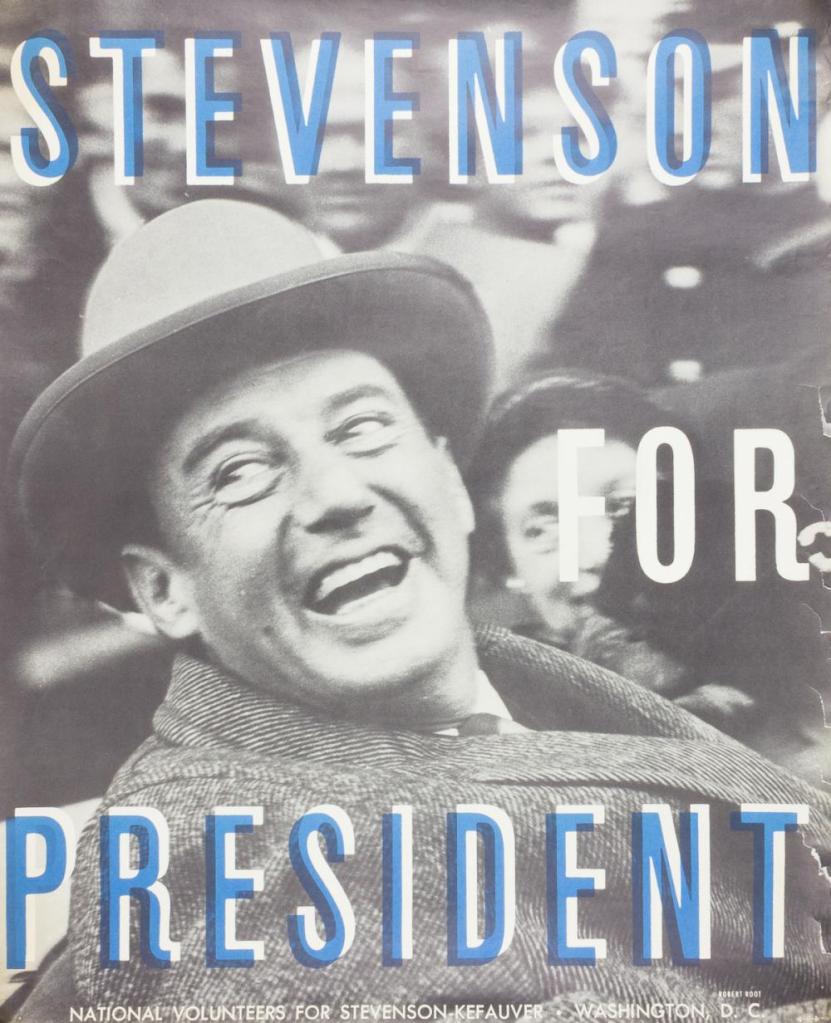
I have voted in every Presidential election since 1952, a year when General Dwight D. Eisenhower, the Republican, overwhelmed my choice, Democrat Adlai Stevenson of Illinois. That means I have already cast my vote in 18 consecutive Presidential elections.
This year, I voted early, and I might say this vote affected my emotions more than any I have cast in the previous Presidential elections since I turned 21 (the legal voting age at the time).
My wife, Jean, and I were determined not to miss voting this time, so we went to one of nine “vote early” places in Milwaukee, choosing first the Tippecanoe Public Library Branch on the city’s Southeast Side, only to see a line stretching nearly a block long. Hoping to find shorter lines, we ventured to the Mitchell Street library branch, happily finding a nearby parking spot and no line of voters outside.

That was a fooler, however. The line was just as long stretching through the book racks inside the huge library branch which had been created out of the first floor of a former department store. The library had thoughtfully placed chairs so that the elderly and disabled could find some comfort in the wait. It was obvious we were in store for a long wait, and we took our place at the end of the line behind an older African American man with a cane, obviously walking in pain.
The people standing in line in this urban branch library were a microcosm of the American population today. The branch library is located on Mitchell Street, long a major neighborhood shopping street; some 60 years ago, the street was smack-dab amid a heavy population of Polish citizens, and it wasn’t rare to see store signs written in Polish and English. Today, the same street is busy with stores serving a heavily Latino populations, along with various Asian peoples. Virtually every store has signs in Spanish and English.
In a sense, the Mitchell Street neighborhood is like many similar areas in most American major cities today. Our cities – indeed our whole nation – are becoming more and more diverse.
I heard nary a complaint from the 100-plus Milwaukeeans who were standing in line. Perhaps because we were in a library, everyone talked in muffled tones, if they talked at all. Old and young (it was heartening to see so many 20-somethings in line) Anglo, Hispanic, Pacific Islanders and Asian folks made up the line.
The young lady behind us yawned twice, and I kidded her: “Long night?”
“Yes, and am I paying for it?” she said. “But this is my day off.”
I praised her for coming to vote, even though she was not feeling too energetic. She said that she was not quite 30 and apologized for voting only twice before. “I’m going to change that,” she promised.
Every so often we heard a large cheer arising out of the meeting room, where the voting was held. Eventually, we got inside the meeting room to show our ID and to get our ballots, only to hear the cheer again, obviously coming from the poll workers. “Another first-time voter,” a poll worker explained.
The enthusiastic cheering seemed to occur every several minutes, adding to the spirit of the room. Hat’s off to the poll workers for developing a cheerful, positive feeling for all the voters.
While in line, we saw an elderly couple, most likely Hmong, emerging after voting. They wore huge, satisfied smiles and you could sense the pride from the couple in knowing they were being given a voice in choosing the leaders of this country.
The fact that millions of American citizens are willing to take time out of their day to vote and stand in line for hours is testimony of the trust and belief that most of us have in the system.
How shameful is it that one of the Presidential candidates and his cohorts continue to sow distrust? If he doesn’t win, he tells us the election will be stolen. Nothing more undermines our democracy than this continual whining that the system is rigged. There has been little evidence anywhere that fraud has affected election outcomes. Our nation and its democratic system can only survive and thrive with the fullest participation of all our citizens – regardless of how they vote.
The dozens of citizens who stood in line with us on Friday have invested in the system and they need to be assured that their trust is warranted. The wanna-be dictator must not be rewarded.
It’s up to all of us to vote. Take it from me: you’ll feel fulfilled after you have done it. And, you’ll add one more voice to counter those who would say the system is rigged. Ken Germanson, Nov. 2, 2024
-
Many of you have probably heard the old saying, “For Want of a Nail, a kingdom was lost.” The saying goes back to the 13th Century, only to have Benjamin Franklin give it a bit more context in 1758,[i] putting it in rhyme:
For want of a nail the shoe was lost,
for want of a shoe the horse was lost;
and for want of a horse the rider was lost;
being overtaken and slain by the enemy,
all for want of care about a horse-shoe nail.[ii]The homily today reflects upon how small things – petty details – might create major changes. Specifically, we’ll be looking at how an encouraging word or a suggestion made by a friend or relative can change someone’s life, can put that person on a whole new course in life.
It could be a tremendously positive change, one that might move someone from despair into hope, from a sense of failure into a reality of success or from a feeling of weakness to strength.
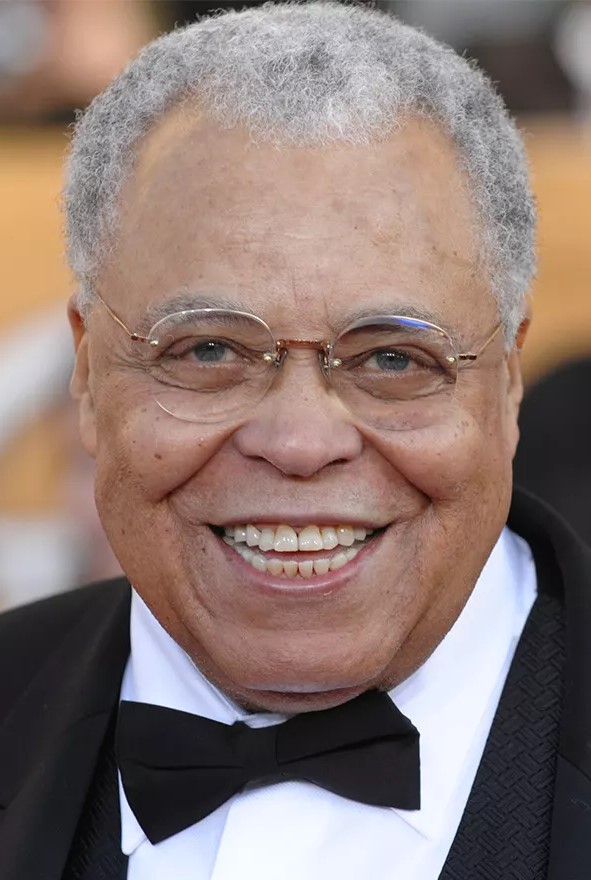
I was led onto this theme for today by the recent death at age 93 of James Earl Jones, the great actor and singer. In his obituary it was noted that he began to stutter badly when he was eight years old. So bad was his stutter – and the fear that it created within him – that he refused to speak, using notes to communicate with others. Raised by a bigoted grandmother and basically deserted by his mother, young James was traumatized.

He was rescued by his high school English teacher in Brethren MI,, Donald Crouch, who saw talent in the boy and encouraged him to write poetry – and then to read it before the class. In a 1974 interview he said: “In a very personal way, once I found I could communicate again, it became very important for me, like making up for lost time, making up for years that I didn’t speak.”
Thus, the insight of a small town high school English teacher to see a promising future in a shy, quiet teen boy resulted in giving us one of the most resonate, and exciting voices we’ve ever enjoyed on stage, television and movies.[iii]
The most renown stutterer of all probably is President Joe Biden, whose stuttering background is well-known, and, I think, still bedevils him a bit these days. It was his mother whom he credited with encouraging him to realize his strengths and not let his speech habits drag him down.
In a People’s Magazine interview, Biden said: “I had a mother with a backbone like a ramrod,” Biden said. “She would look at me and say ‘Look at me Joey, you’re handsome Joey, you’re smart, you’re a good athlete Joey. Don’t let this define you, Joey. Remember who you are.’”
He said his mother’s words would “reinforce” him, and that it really mattered to him. Believing in your child is important, Biden explained.[iv]
Some other examples of famous people who stuttered and found others to succeed in spite of their speech problems include Winston Churchill, Marilyn Monroe, Jack Paar, Raymond Massey, Elvis Pressley and Shaquille O’Neal.
Can you imagine Shaq being a scared boy? But, Shaq was, because of his stuttering. He recalls hoping his teacher would not call on him. “I’d be like, ‘Please don’t call on me, please don’t call on me,’” he says. “I know the teacher is going to call on me and I’m going to stutter and everyone is going to laugh at me.”
It was a college professor, he said, who helped him face up to his problem so that he could get up in front of a class and read his essay. [v]
I can relate to the experiences of James Earl Jones, President Biden and Shaq, having the same dread of being called upon in class. Shaq relates how he was often dismissed as being dumb, even though he knew the answer to a question. Like Shaq, I would not raise my hand as well, or if I knew the exact answer, I would answer in a way to avoid letters that might cause me to stutter, and say something less articulate.
Like the stutterers I’ve mentioned, I credit several people who helped me understand that I, also a serious stutterer well into my twenties, might stutter or stumble over words but that I should go ahead and speak up anyway . . . that I should take the risk of being possibly laughed at or scorned. Incidentally, even when I stuttered, I rarely remember being treated badly or bullied; the fear must have been mostly in my head. But it took other people to help me understand that my particular speech problem (which I considered a disability) should not stifle me in trying to satisfy my ambitions.
I worked nearly all four years in high school in a drug store where I often would have to answer the phone. I dreaded every time when the phone would ring and I would have to answer, since I would have trouble saying “Wh . . . Wh . . . Wh . . . ipp Drugs.” It was the drugstore owner, Waldemar Whipp, who told me not to worry about my difficulty in answering: “The people calling don’t care if you stutter, all they want is to get a prescription ordered.”
What great advice that was! In a sense, he was telling me not to be so self-centered.
That advice was reinforced when I went for an interview after graduating college for my first job as managing editor for a weekly newspaper. Realizing that I’d have to be on the phone often or out doing interviews for stories, I told the newspaper’s publisher that I had a stuttering problem. “Oh,” he said, “I I didn’t hear any stutter.” It puzzled me, since I knew I had stuttered a bit during the interview, realizing that my stutter might not have been as obvious as I feared.
I consider the words of both Pharmacist Whipp and the publisher, Gordon Lewis, to be turning points in my life . . . helping me to realize that my own talents and abilities far overshadowed any problems raised by my stuttering.
The point today is not to glorify James Earl Jones, President Biden, Shaquille O’Neal or myself for overcoming our stuttering, but to note that we couldn’t do it on our own. We needed a high school English teacher, a caring mother, a college professor or a druggist to tell us we had talents and abilities . . . to tell us that it would be a shame to rob the world of those talents . . . to let us know that we need not be cheated out of the joys and successes of life . . . just because we had a problem saying our “w’s,” “h’s,” or “n’s,” which were my hurdles in speaking.
Thus, I go back to today’s opening reflection which said, “If it weren’t for that circumstance or that person, I wouldn’t be where I am today.”
Most of you, I’m sure, may also have experienced horrors from different sources that you feared may have threatened your ability to succeed . . . maybe your family was too poor, maybe you thought you were too fat or too thin, maybe you were embarrassed by a family member. Who knows? Most of us have feelings of inadequacy that make us want to avoid attention.
To work through these problems, we do indeed need our own persistence, dedication and courage, but we also need the support of others. Are we not, in many ways, our brothers and sisters keepers? (Adapted from Homily by Ken Germanson before Community of the Living Spirit, Waukesha WI, Sept. 22, 2024)
[i] https://www.bookbrowse.com/expressions/detail/index.cfm/expression_number/558/for-want-of-a-nail-the-kingdom-was-lost
[ii] https://www.inc.com/jessica-stillman/james-earl-jones-didnt-talk-10-years-stutter-how-learned-talk-again-inspirational-lesson.html
[iii] “James Earl Jones, Resonate Voice of Stage and “Star War,’ Dies at 93” New York Times, Sept. 11,2024
[iv] https://people.com/politics/joe-biden-how-overcame-stutter-gives-advice-others/
-
(From a homily delivered by Ken Germanson to the Community of the Living Spirit, a nondenominational worship group in Waukesha WI on Jan. 14, 2024)
The inspiration for today’s homily comes again from my great grandfather William Day Simonds who as I’ve told you before was a prominent Unitarian minister first in Madison WI and later in Oakland CA. He often gave sermons based on various Shakespeare characters, and today we’ll be talking about Brutus.
Brutus, let me remind you, was a friend and companion of Julius Caesar, and appears in Shakespeare’s famous play, Julius Caesar. Brutus may be the most interesting figure in the play that featured not only the Great Caesar, but Marc Antony, Cassius, Cinna and other prominent figures of ancient Rome.
Indeed, in the play and in recorded history, Antony praises Brutus thusly, saying “This was a man!”

New Yorker, Jan 15, 2024. What made Brutus so notable and so important for us today is that he sacrificed his life to protect democracy from being destroyed by Caesar and his allies.
This all occurred in the years from 49 BC to 42 BC, when the mighty Caesar, riding high on the worshiping from the citizens of Rome due to his victories in the Pompeiian Wars, threatened to destroy the democratic form of government that Rome had established.
Brutus saw the dangers arising from the prospect of his longtime friend, companion and mentor Caesar who appeared to be headed toward destroying the world’s first democracy and turning it into a dictatorship. In seeing the growing tendency of Caesar to do away with democratic processes in Rome, Brutus after much debate with himself had joined with others, like Cassius (another prominent Roman tribune) to assassinate Caesar.
Brutus – always a man of great honor and integrity – joins with the conspirators to stab Caesar to death, at the same time urging his fellow murderers to treat their victim with honor and not disfigure him. Brutus is the last to raise his knife to slay his longtime friend, with the dying Caesar uttering the words (in Shakespeare’s play), “et tu, Brutus.” Historians dispute that Caesar did speak as he was being slaughtered.
Brutus is troubled by his action and makes this comment in the play:
“If there be any in the assembly, any dear friend of Caesar’s to him I say that Brutus’ love to Caesar was no less than his. If, then, that friend demand why Brutus rose against Caesar, this is my answer – not that I loved Caesar less, but that I loved Rome more.”
Indeed, many have characterized Brutus as a traitor to Rome for his role in the assassination of Caesar.
Pastor Simonds, however, believed that Brutus’ motives were strictly to save democracy and the Roman state.
Rome of the year 44 BC sounds strangely like the United States in 2024. Caesar’s victory over Pompey had so enamored him with the Plebeians of the day that they were ready to make him king – the equivalent of being a dictator. Mobs of that day must have shouted out with the same wild cheers that Donald Trump gets every time he mounts the stage.
Alas, the emperor may have no clothes, but his followers see only he’s wearing all the fineries of an ancient ruler. Today in 2024, some 30 to 35 percent of Americans care nothing for the crudeness and ruthlessness and the dishonesty and lack of integrity shown by Mr. Trump. He’s mesmerized his supporters, as Caesar had done more than 2000 years ago. A demagogue is dangerously close to succeeding in ending our democracy; Caesar was planning to become dictator in 44 BC and Donald Trump has already declared that he will become a dictator on his first day in office.
Obviously, we don’t advise the assassination of the former president as Brutus and his allies did, but we do indeed need to find people who would follow the example of Brutus and show courage to speak up to tell the truth about Trump and his plans . . . even if it endangers their own personal fortunes.
A few already have, like Michael Cohen, a onetime Trump attorney, but he did so mainly to save his own skin so as to receive light sentence.
Perhaps the person who may best exemplify the spirit of Brutus’ courage is the Cassidy Hutchinson, a young woman who at age 25 found herself as chief aide to Trump’s top deputy, Mark Meadows. Her testimony in 2022 of what she saw going on in the bowels of the White House has been devastating in the effort to hold Trump responsible for his actions in seeking to overthrow the results of the 2020 election.
Cassidy could easily have succumbed to pressure from Trump and his lackeys, who had hired an attorney to represent her in the Congressional hearings. The attorney basically told her to shut up and tell the examining committee nothing about what she saw; she fired the attorney chose to go with the truth, even though it meant divorcing herself from the connections and relations she had with her peers in the Trump Administration.
Make no mistake about it: it takes courage to be a “whistle-blower,” to go against the flow. In most cases, the truth-teller finds himself or herself all alone, out on the limb of a tree that feels like it might break off soon and plunge the person to a crushing fall.
To her fellow conservatives – the young Cassidy certainly came into the White House as a committed one – she was cast as a traitor. To those who dislike Trump, of course, she was a heroine.
I can’t imagine what it was like for this young woman from a working-class family in New Jersey to find herself deep within the workings of the most powerful office on earth. Remember, she was about as close to the source of that mighty power as anyone, particularly in her position as chief assistant to Mark Meadows, the man who had the ear of Donald Trump.
As it has happened, Cassidy has gained notoriety and has even authored a book, entitled “Enough,” from which she expects to profit. This leads one to wonder: were her motives as pure as they seem? Or, did she really seek personal profit in her actions?
Of course, we can’t probe her mind to find her true purpose, but the point is she had the courage to step forward to do right by her nation. It was a patriotic act, no matter how you want to cast it.
Shakespeare’s Brutus, as Pastor Simonds reminds us, was not a perfect person. Historians have described him as being arrogant and intolerant toward anyone of a lower status in society. Also, his wife, Portia kills herself, largely because of Brutus’ long absences from home, and because he refused to accept her warning that he should abandon his mission to destroy Caesar.
Regardless of the human frailties that Brutus may have exhibited, Pastor Simonds offers him as an example of what a human being must achieve. His sermon ends with these words (please excuse his use of the male pronoun, remember this was in 1898). He said:
“Our ideal man we can say – his aim is high and pure. His thought is broad and just. He seeks no conquest save over ignorance and cruelty and crime. . . His creed is peace. His religion is love. He rejects a patriotism that is only selfishness disguised, and courage exercised in cruelty. . . ‘The world is my country and to do good is my religion,’ is his confession of faith.”
That is the point of this sermon about Brutus. In all things, we must seek and tell the truth and to have the courage to speak up and act on that truth. That is the key to saving our democracy and our own souls.
READINGS:
“His life was gentle; and the elements
So mixed in him, that Nature might stand up
And say to all the world, THIS WAS A MAN!”― William Shakespeare, Julius Caesar
*****
I speak not to disprove what Brutus spoke,
But here I am to speak what I do know.
You all did love him once, not without cause:
What cause withholds you then, to mourn for him?
O judgment! thou art fled to brutish beasts,
And men have lost their reason. Bear with me;
My heart is in the coffin there with Caesar,
And I must pause till it come back to me.
— Julius Caesar (Act 3, Scene 2, lines 73–108)*****
Psalm 23:1-4
The LORD is my shepherd, I lack nothing. He makes me lie down in green pastures, he leads me beside quiet waters, he refreshes my soul. He guides me along the right paths for his name’s sake. Even though I walk through the darkest valley, I will fear no evil, for you are with me; your rod and your staff, they comfort me. You prepare a table before me in the presence of my enemies. You anoint my head with oil; my cup overflows. Surely your goodness and love will follow me all the days of my life, and I will dwell in the house of the LORD forever.
*****
“Even if you’re on the right track, you’ll get run over if you just sit there.” ~ Mother Teresa
*****
“The opposite of courage is not cowardice; it is conformity. Even a dead fish can go with the flow.” —Jim Hightower
-
Subscribe to continue reading
Subscribe to get access to the rest of this post and other subscriber-only content.



 Advoken's Blog