Many of you have probably heard the old saying, “For Want of a Nail, a kingdom was lost.” The saying goes back to the 13th Century, only to have Benjamin Franklin give it a bit more context in 1758,[i] putting it in rhyme:
For want of a nail the shoe was lost,
for want of a shoe the horse was lost;
and for want of a horse the rider was lost;
being overtaken and slain by the enemy,
all for want of care about a horse-shoe nail.[ii]
The homily today reflects upon how small things – petty details – might create major changes. Specifically, we’ll be looking at how an encouraging word or a suggestion made by a friend or relative can change someone’s life, can put that person on a whole new course in life.
It could be a tremendously positive change, one that might move someone from despair into hope, from a sense of failure into a reality of success or from a feeling of weakness to strength.
I was led onto this theme for today by the recent death at age 93 of James Earl Jones, the great actor and singer. In his obituary it was noted that he began to stutter badly when he was eight years old. So bad was his stutter – and the fear that it created within him – that he refused to speak, using notes to communicate with others. Raised by a bigoted grandmother and basically deserted by his mother, young James was traumatized.
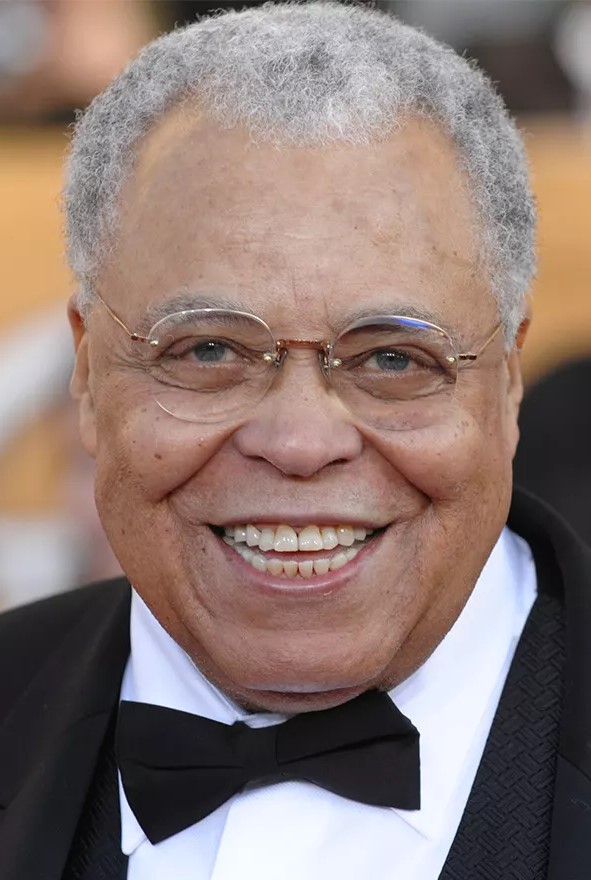
He was rescued by his high school English teacher in Brethren MI,, Donald Crouch, who saw talent in the boy and encouraged him to write poetry – and then to read it before the class. In a 1974 interview he said: “In a very personal way, once I found I could communicate again, it became very important for me, like making up for lost time, making up for years that I didn’t speak.”
Thus, the insight of a small town high school English teacher to see a promising future in a shy, quiet teen boy resulted in giving us one of the most resonate, and exciting voices we’ve ever enjoyed on stage, television and movies.[iii]
The most renown stutterer of all probably is President Joe Biden, whose stuttering background is well-known, and, I think, still bedevils him a bit these days. It was his mother whom he credited with encouraging him to realize his strengths and not let his speech habits drag him down.
In a People’s Magazine interview, Biden said: “I had a mother with a backbone like a ramrod,” Biden said. “She would look at me and say ‘Look at me Joey, you’re handsome Joey, you’re smart, you’re a good athlete Joey. Don’t let this define you, Joey. Remember who you are.’”
He said his mother’s words would “reinforce” him, and that it really mattered to him. Believing in your child is important, Biden explained.[iv]
Some other examples of famous people who stuttered and found others to succeed in spite of their speech problems include Winston Churchill, Marilyn Monroe, Jack Paar, Raymond Massey, Elvis Pressley and Shaquille O’Neal.
Can you imagine Shaq being a scared boy? But, Shaq was, because of his stuttering. He recalls hoping his teacher would not call on him. “I’d be like, ‘Please don’t call on me, please don’t call on me,’” he says. “I know the teacher is going to call on me and I’m going to stutter and everyone is going to laugh at me.”
It was a college professor, he said, who helped him face up to his problem so that he could get up in front of a class and read his essay. [v]
I can relate to the experiences of James Earl Jones, President Biden and Shaq, having the same dread of being called upon in class. Shaq relates how he was often dismissed as being dumb, even though he knew the answer to a question. Like Shaq, I would not raise my hand as well, or if I knew the exact answer, I would answer in a way to avoid letters that might cause me to stutter, and say something less articulate.
Like the stutterers I’ve mentioned, I credit several people who helped me understand that I, also a serious stutterer well into my twenties, might stutter or stumble over words but that I should go ahead and speak up anyway . . . that I should take the risk of being possibly laughed at or scorned. Incidentally, even when I stuttered, I rarely remember being treated badly or bullied; the fear must have been mostly in my head. But it took other people to help me understand that my particular speech problem (which I considered a disability) should not stifle me in trying to satisfy my ambitions.
I worked nearly all four years in high school in a drug store where I often would have to answer the phone. I dreaded every time when the phone would ring and I would have to answer, since I would have trouble saying “Wh . . . Wh . . . Wh . . . ipp Drugs.” It was the drugstore owner, Waldemar Whipp, who told me not to worry about my difficulty in answering: “The people calling don’t care if you stutter, all they want is to get a prescription ordered.”
What great advice that was! In a sense, he was telling me not to be so self-centered.
That advice was reinforced when I went for an interview after graduating college for my first job as managing editor for a weekly newspaper. Realizing that I’d have to be on the phone often or out doing interviews for stories, I told the newspaper’s publisher that I had a stuttering problem. “Oh,” he said, “I I didn’t hear any stutter.” It puzzled me, since I knew I had stuttered a bit during the interview, realizing that my stutter might not have been as obvious as I feared.
I consider the words of both Pharmacist Whipp and the publisher, Gordon Lewis, to be turning points in my life . . . helping me to realize that my own talents and abilities far overshadowed any problems raised by my stuttering.
The point today is not to glorify James Earl Jones, President Biden, Shaquille O’Neal or myself for overcoming our stuttering, but to note that we couldn’t do it on our own. We needed a high school English teacher, a caring mother, a college professor or a druggist to tell us we had talents and abilities . . . to tell us that it would be a shame to rob the world of those talents . . . to let us know that we need not be cheated out of the joys and successes of life . . . just because we had a problem saying our “w’s,” “h’s,” or “n’s,” which were my hurdles in speaking.
Thus, I go back to today’s opening reflection which said, “If it weren’t for that circumstance or that person, I wouldn’t be where I am today.”
Most of you, I’m sure, may also have experienced horrors from different sources that you feared may have threatened your ability to succeed . . . maybe your family was too poor, maybe you thought you were too fat or too thin, maybe you were embarrassed by a family member. Who knows? Most of us have feelings of inadequacy that make us want to avoid attention.
To work through these problems, we do indeed need our own persistence, dedication and courage, but we also need the support of others. Are we not, in many ways, our brothers and sisters keepers? (Adapted from Homily by Ken Germanson before Community of the Living Spirit, Waukesha WI, Sept. 22, 2024)
[i] https://www.bookbrowse.com/expressions/detail/index.cfm/expression_number/558/for-want-of-a-nail-the-kingdom-was-lost
[ii] https://www.inc.com/jessica-stillman/james-earl-jones-didnt-talk-10-years-stutter-how-learned-talk-again-inspirational-lesson.html
[iii] “James Earl Jones, Resonate Voice of Stage and “Star War,’ Dies at 93” New York Times, Sept. 11,2024
[iv] https://people.com/politics/joe-biden-how-overcame-stutter-gives-advice-others/
 Advoken's Blog
Leave a comment