It was about 70 years ago that I first read O. E. Rolvaag’s “Giants in the Earth,” a book that was published in 1927 and was often included in literature courses back in the mid-20th Century.
In all the years since, I’ve never forgotten reading the novel about the Norwegian immigrant family that joined three other families in the 1870s to homestead on the bleak plains of South Dakota. Recently, I ordered a reprint of the novel — long since forgotten by most readers — from our local independent bookseller and have begun to read it again. I learned soon that it’s a most fitting read during this time of Covid-19 isolation, since it has forced me to understand how important the experiences of the family — the optimistic Per Hansa and his despairing wife, Beret, and their children — illustrated two traits that were within the nature of our ancestors that helped to create our nation.
First of all, is the patience and persistence that was required by Per Hansa’s family in order endure the harsh 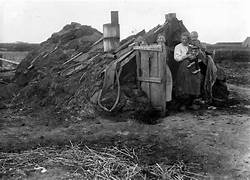 bitterly cold and then the stifling heat of South Dakota weather while living in tight quarters of their sod house. The moment I begin feeling sorry for myself for the current isolation I think of that family, huddled together in cramped quarters during the seemingly never-ending winters; I read how Beret grows more and more pessimistic that the family will survive. And, yet, she perseveres, trusting that her sometime impulsive husband will figure out a way.
All of a sudden I began to realize that spending eight-weeks in a 21st Century isolation doesn’t seem so bleak. After all, didn’t I have my computer, a television set with its 300 channels, shelves of books and a telephone to keep me company — along with my partner?
The other trait the Per Hansa family showed was an understanding of the value of “collectivism.” There’s a myth that it was our independent nature that brought about the pioneering spirit that caused our ancestors to settle this nation, to move west from the East Coast to Ohio, then Iowa, the Dakotas and eventually Oregon and California. In reading “Giants in the Earth,” you’ll see how the four Norwegian families staked out their respective 640-acre sections of potential farmland by working together, by sharing tools, joining in planting and harvesting crops, and providing emotional support in times of stress or fear from possible attacks by predators of various sorts. It’s obvious the Per Hansa and his family could not have survived without their neighbors.
Today, I wonder: Have we lost that spirit of cooperation and collaboration that was so needed to settle America?
During this coronavirus period we’ve been told that scientists and health experts were nearly unanimous in their view that social distancing along with the wearing personal protective gear would be the only way to slow down the impact of the highly contagious Covid-19. Yet, far too many Americans are crying out that their “freedom” has been taken away by “safe at home” orders and have chosen to deny that they had any stake in protecting their health and most importantly the health of others.
The sight of people cramming into taverns in Wisconsin on the night that the State’s Supreme Court ended the governor’s “stay at home” order was particularly alarming and disgusting. While it’s OK, perhaps, to risk you own health, it’s certainly wrong to risk the health of others. Yes, perhaps you’re a young person who is impatient to “beer up,” but when you do so in a crowded gin joint you risk the chance of going home and carrying the virus to a grandparent in your household or a co-worker on the job.
Those who demonstrated against the “stay at home” orders were merely being selfish and showing little regard for their fellow citizens. They cared little for the “collective spirit” that was needed to build this great nation. Eighty years ago this May 12th, Winston Churchill told the British they would have to experience “blood, sweat and tears” in the face of the Germany’s blitz bombing of London. And the Brits responded in great fashion.
Sadly too many Americans are rejecting our pioneer spirit that caused us to join together with others to solve mutual problems or to resolve issues so that “all” may prosper. Too many seek to be “independent” to do whatever they want.
We’ve seen that play out in the lower interest shown by so many persons in joining bowling leagues, supporting their church, becoming union members and participating in many other activities. (Note: tennis courts — once in heavy demand 40 years ago — today are often empty with weeds growing in the cracked asphalt.)
In truth, there were many more of us who understood our role in our “collective” society during this time of enforced isolation and recognized that in our need to protect ourselves against the virus we were joining together to protect everyone else. In Rolvaag’s novel that was based on his own family’s experiences, it was persistence and collectivism that was needed to survive and thrive. More of us need to take that lesson to heart. — Ken Germanson, May 13, 2020


 Advoken's Blog
Leave a reply to Saul Schniderman Cancel reply